
Vacant Land Buyers
Buying Vacant Land in Pennsylvania: What Should You Know Before You Buy
Buying vacant land can be exciting, but purchasing land is very different from purchasing a home. A beautiful wooded lot, mountain property or acreage may look perfect, but that does not necessarily mean you can build what you want on it.
At Castle Gate Realty, we help vacant land buyers throughout Carbon County and surrounding areas of Northeastern Pennsylvania investigate the questions that can affect whether a property will actually work for their plans.
How is vacant land financing different from a home mortgage?
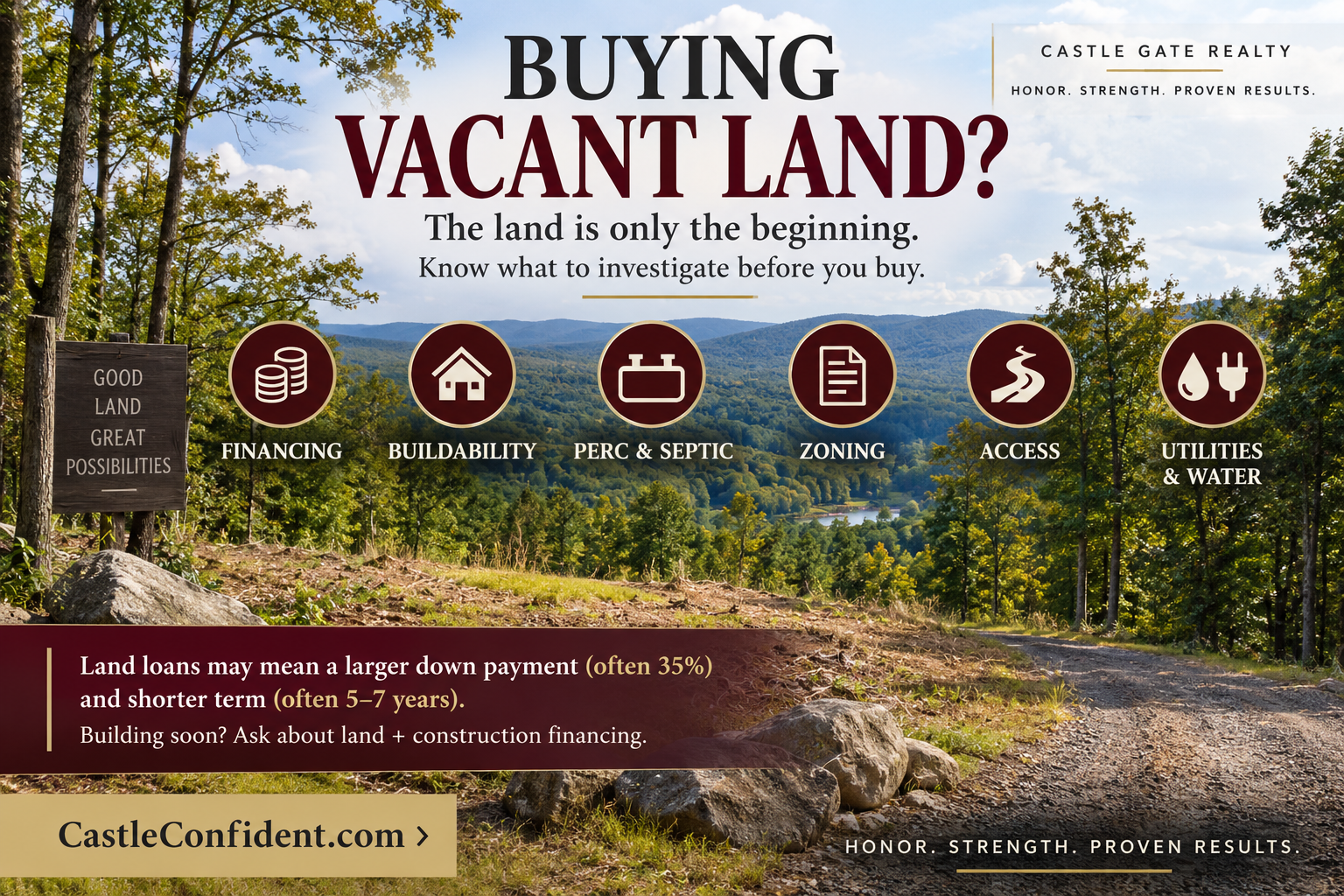
Vacant land financing can be considerably different from financing a home. Fewer lenders offer land loans, and buyers should be prepared for a larger down payment, often around 35%, and a shorter repayment term, often 5–7 years.
If you plan to build a home soon, ask about a land and construction loan. These loans may allow the purchase of the land and construction of the home to be financed together and can offer terms more similar to traditional home financing.
Before seriously shopping for land, talk with a lender who understands vacant land and construction financing.
How do I know if vacant land is buildable?
Never assume that because a parcel exists, you can build a house on it.
The real question is: Can I use this property for what I intend to do with it?
Zoning, minimum lot size, setbacks, septic requirements, legal access, wetlands, deed restrictions, easements, topography and other factors can all affect whether and where you can build.
What should I know about a perc test when buying land?
If the property will require an on-lot septic system, find out whether the property has passed a perc test and whether previous testing or approvals are still applicable.
A successful perc test is important, but it does not automatically mean the property is buildable. Buyers still need to investigate zoning, setbacks, access, environmental conditions and other requirements.
What zoning questions should I ask before buying vacant land?
Verify the property's zoning directly with the municipality. Questions should include:
What is the property zoned? Is your intended use permitted? What are the required setbacks? What is the minimum lot size? If the parcel is smaller than today's requirements, is it a legal pre-existing lot? Is there enough usable space for the house, driveway, well and septic system? Are any zoning changes being considered?
Do not rely solely on how neighboring properties are being used.
How do I know if vacant land has legal access?
Physical access and legal access are not always the same thing.
Determine whether the property fronts a public or private road and whether the parcel has legally established access. If access is provided through an easement, review the recorded easement and any maps or maintenance agreements.
Also investigate who maintains and plows a private road, whether a driveway permit will be required, and whether the property's slope or terrain could make driveway construction difficult.
What easements and deed restrictions should I investigate?
Ask whether there are deed restrictions, easements, rights-of-way or encroachments affecting the property.
If an easement exists, determine exactly what it allows, where it is located and whether there are maintenance responsibilities associated with it.
Property boundaries should also be clearly understood. A survey may be appropriate depending upon the property and circumstances.
Should I investigate wetlands, streams and flood zones?
Yes. Determine whether the property contains wetlands, streams, creeks, ponds, lakes or flood zones.
These features can affect where construction, septic systems, driveways and other improvements may be located. Properties within certain watersheds or environmentally sensitive areas may also have additional requirements.
If flood zones are present, investigate whether your proposed building location could be affected and whether flood insurance may be required.
What utilities should I check before buying land?
Do not assume utilities are available simply because other homes are nearby.
Determine whether electricity is available at the road and, if not, what it may cost to bring service to the building site. Look for overhead power lines and easements.
Also investigate water, sewer, natural gas, propane, cable and internet availability when those services are important to you.
If there is no public water or sewer, investigate the requirements for a private well and septic system.
Does the slope of vacant land matter?
Absolutely. A parcel can contain several acres but have a much smaller usable building area.
Steep terrain can affect driveway construction, excavation, foundation costs, drainage, septic placement and the location of the home. Significant grading, retaining walls or other site work can substantially increase construction costs.
What should I know about private communities and HOAs?
If the property is located within an HOA or private community, review the governing documents before buying.
Look for minimum home sizes, architectural requirements, building restrictions, approved construction materials, rules regarding modular homes, garages, sheds, fences and other improvements. There may also be additional fees or approval requirements associated with new construction.
What should I investigate about the surrounding properties?
Look beyond the boundaries of the land you are considering.
Does it border state game lands or other public property? Is there traffic noise? Is it near an airport or airstrip? Are there neighboring uses that could affect your enjoyment of the property?
If you are buying because of a beautiful view, determine who owns the land between your proposed home and that view. Trees can grow and neighboring land can sometimes be developed.
Are there environmental issues I should investigate?
Depending on the property's location and history, investigate possible soil, groundwater or other environmental concerns.
Questions may include whether the property was previously farmed, whether chemicals or pesticides may have been used, whether underground fuel tanks were ever present, or whether previous industrial activity in the surrounding area could be relevant.
Large wooded parcels may also have timber value worth investigating.
What are the most important questions to ask before buying vacant land?
Every property is different, but a vacant land buyer may need to investigate:
Financing • Perc and septic • Wells and water • Zoning • Setbacks • Minimum lot size • Legal access • Public vs. private roads • Driveway permits • Easements • Deed restrictions • Surveys and boundaries • Encroachments • Wetlands • Streams • Flood zones • Watersheds • Utilities • Power lines • Topography and slope • HOA restrictions • Road maintenance • Neighboring properties • Environmental history • Timber value
The important thing is not simply finding land you love. It is determining whether that land will work for what you intend to do with it.
Do I need a Realtor when buying vacant land?
Working with an agent experienced with vacant land can help you identify questions and potential issues that may otherwise be overlooked.
A Realtor does not replace the municipality, lender, engineer, surveyor, sewage enforcement officer, attorney, title company or other appropriate professional. Our role is to help you understand the process, identify what needs to be investigated and help you get the right questions answered before you buy.
Who can help me buy vacant land in Carbon County, Pennsylvania?
Castle Gate Realty assists buyers purchasing vacant land, building lots, wooded acreage and recreational property throughout Carbon County and surrounding areas of Northeastern Pennsylvania, including Lehighton, Palmerton, Jim Thorpe, Albrightsville, Lake Harmony and surrounding communities.
If you're considering buying land, start with a Castle Gate Realty buyer consultation. We'll talk about what you want to do with the property and help you understand what should be investigated before you make an offer.
Castle Gate Realty
Honor. Strength. Proven Results.
CastleConfident.com
